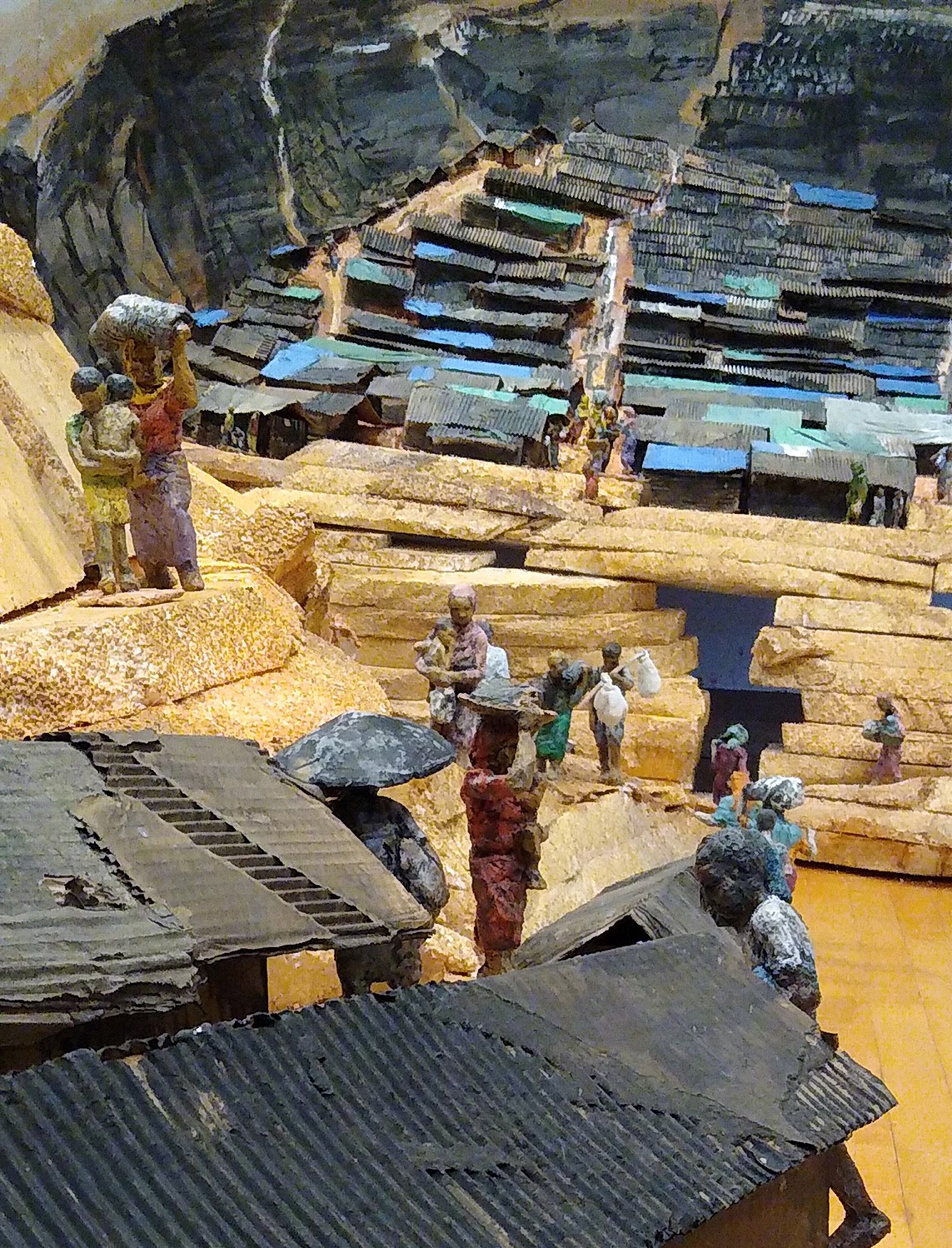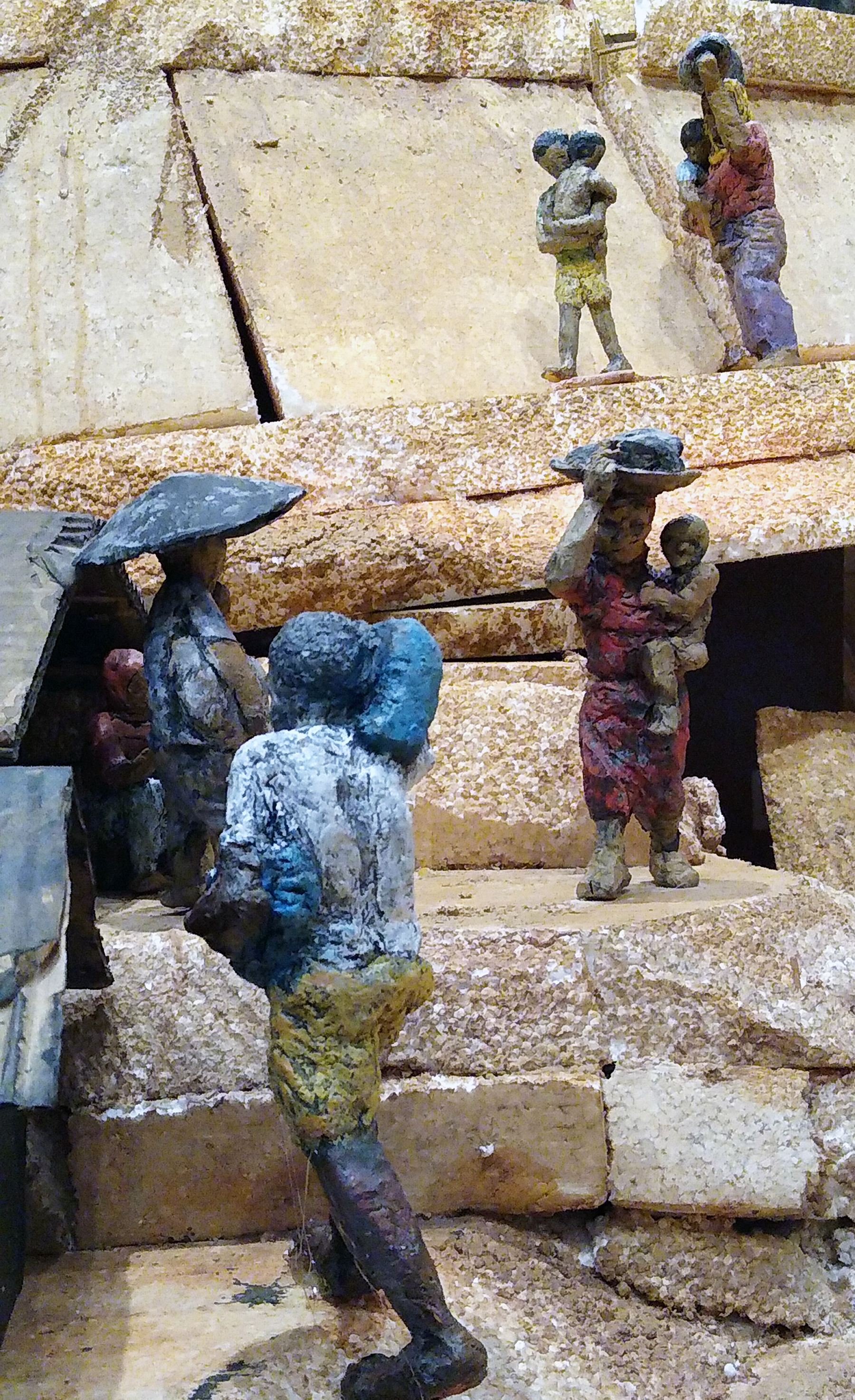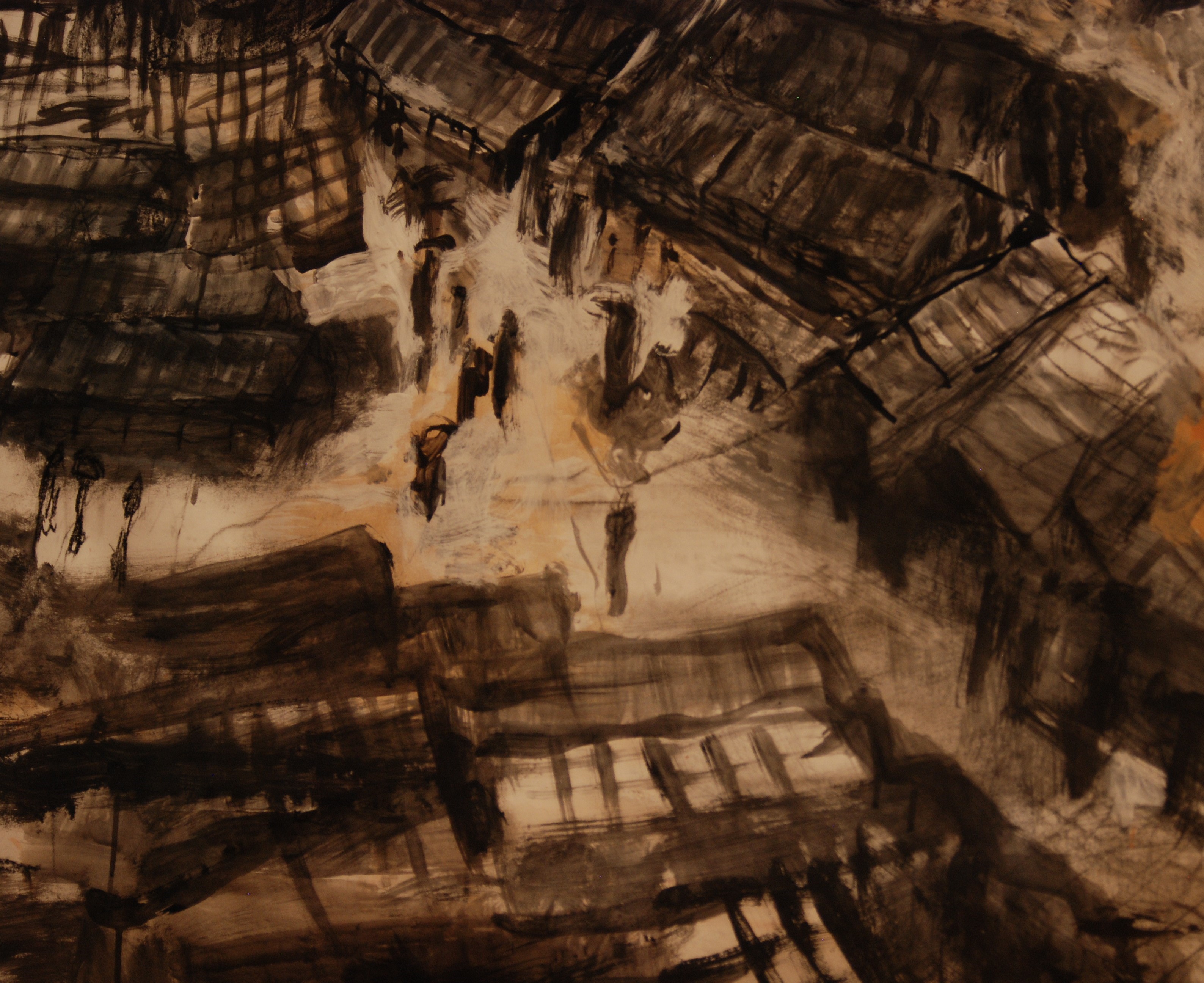
The awful magnitude of their crisis strikes the viewer first. But it is the depiction of their daily routines that brings the reality of their situation home to me. How do they get water? What do they cook with? How do they manage those slippery hills barefoot? How do they wash their clothes? And look how civilly they appear to treat one another.
My work asks the viewer to journey with these people for a short time. The story of the Rohingya is one of strength, resourcefulness and generosity. The Rohingya tell us a lot about what it means to be human.
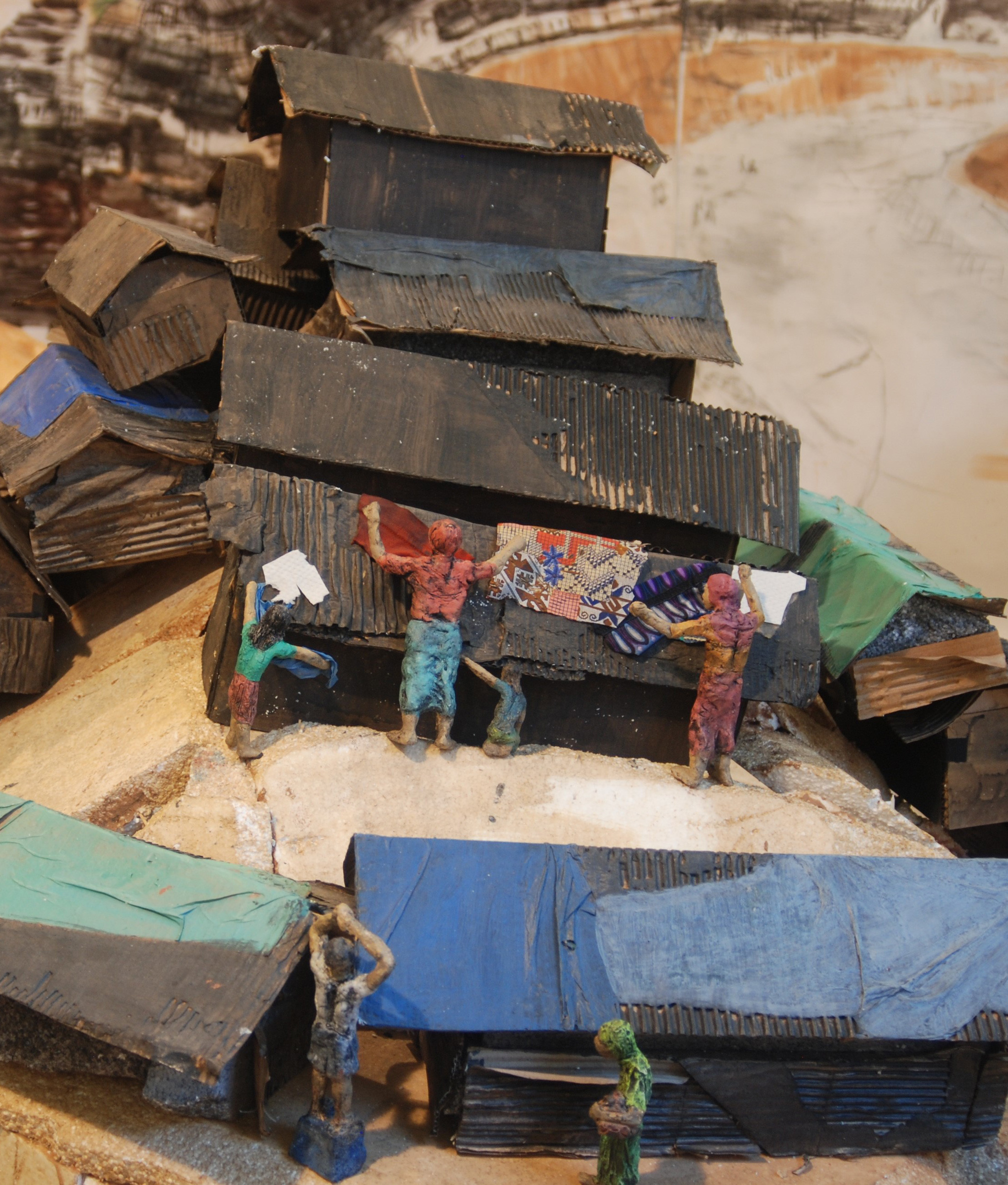
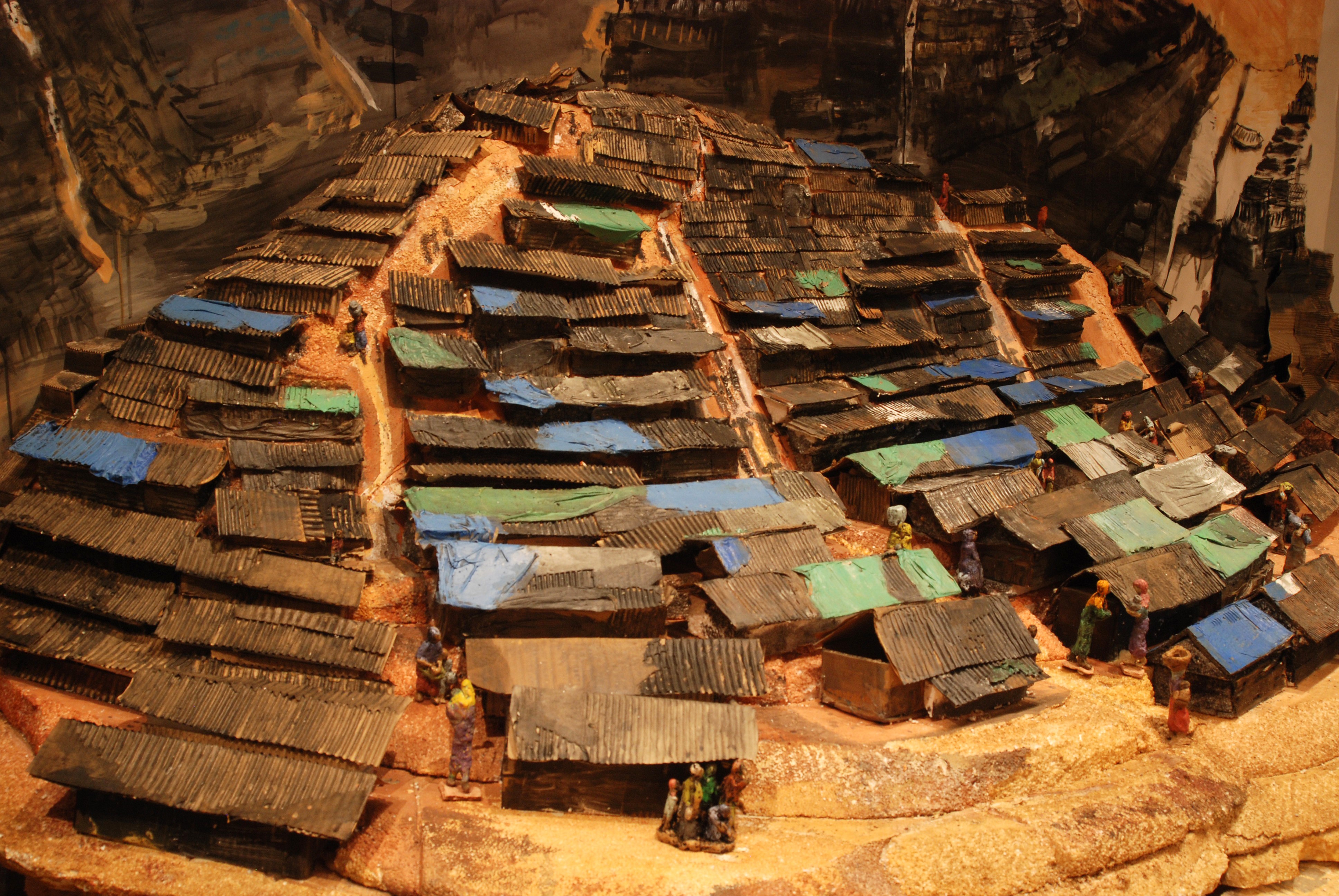
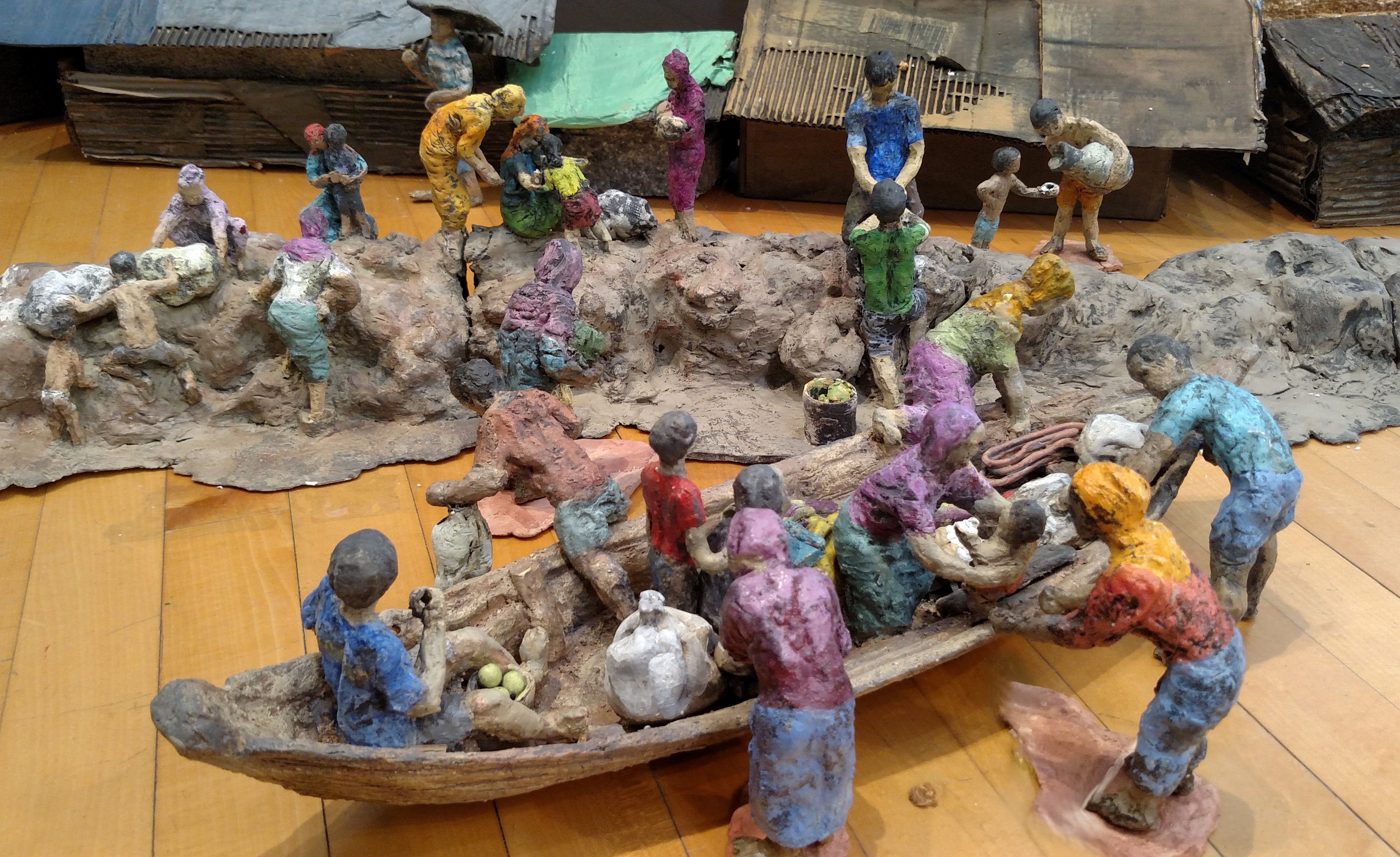
The installation, “The Rohingya,” was first shown at the Loomis Chafee School in 2020. It depicts the arrival of the Rohingya in a refugee camp in Bangladesh. It is 18 ft.W by 20 ft. D by 9 ft. H and is made from cardboard, Styrofoam, painted wood and ceramic figures. The painted ceramic figures are 6-8 in. H.
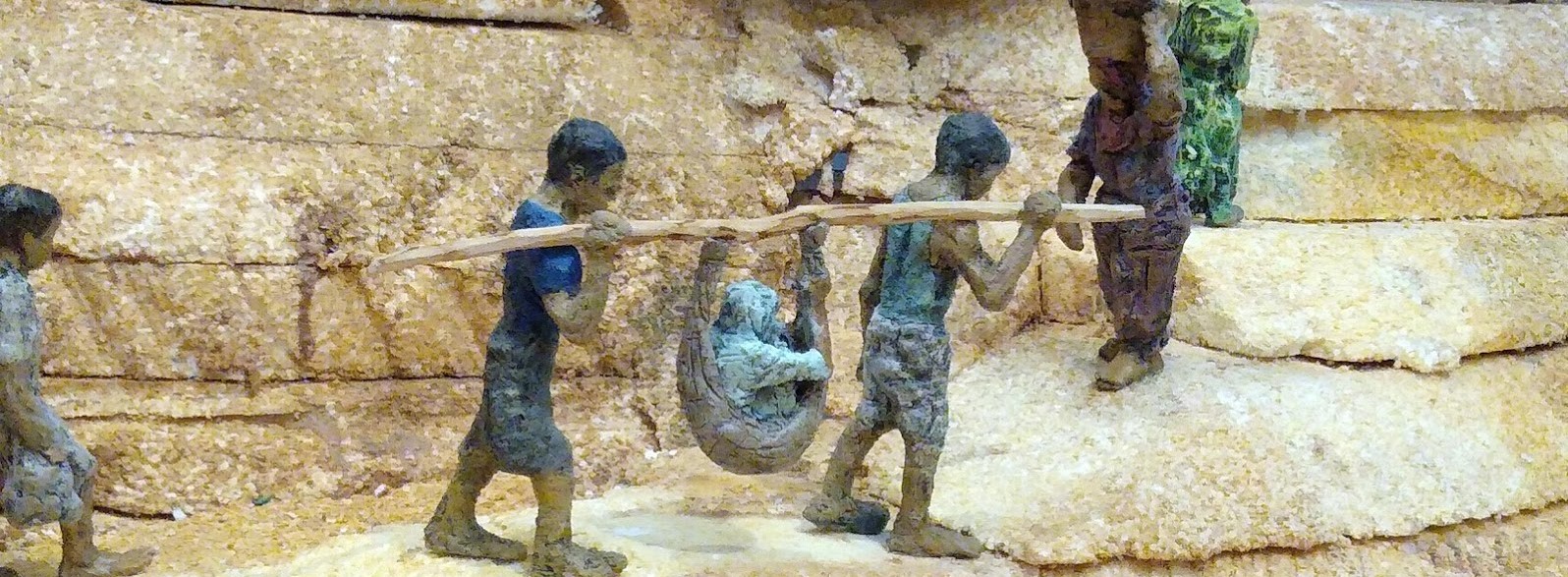
The Rohingya, a Muslim minority, are persecuted in most brutal ways by the armed forces of Myanmar. They have fled to a no-man’s land in Bangladesh, where they are forced to settle on hills awash in runoff. They arrive with almost nothing in their small boats or by walking over muddy dikes between rice fields. They have many small children, and they carry their old folks on their backs using a carrying pole.
They construct their camps with meagre plastic tarps affixed to bamboo structures. They are an ancient culture and despite poverty and persecution, their families and culture remain intact.